Moon Painting:The Glow of Its Own MoonLight
by Ashwini Kumar_Sinha in Design > Art
29 Views, 0 Favorites, 0 Comments
Moon Painting:The Glow of Its Own MoonLight


This painting captures the moon in a way that feels almost alive. In daylight, it looks like a beautifully detailed moonscape, but once the lights go out, a fine layer of glow-in-the-dark acrylic brings it to life. The moon begins to emit its own gentle light, thanks to radium-based pigments that shift into a soft lunar glow in the dark.
It uses multiple layers of acrylic paint and glow-in-the-dark acrylic paint consisting of very fine radium dust that glows in the dark. This is combined with a special layer of colour that makes it glow in the actual shade of moonlight. At night, the painting changes colour because of this special glowing layer, giving the moon a realistic and magical appearance.
Supplies


- Painting Brush
- Painting Knife
- Acrylic Paint Colours
- Acrylic Primed Cotton Canvas
- Glow In Dark Paint Colour
- Radium Powder
- Water
Preparing First Layer


To prepare the first layer, begin by mixing midnight blue and black acrylic paint, adding just a touch of white to soften the tone and create gentle depth. Blend the colours well on your palette until they form a smooth, rich night-sky shade. Using a wide, soft brush, apply this mixture evenly across the canvas, brushing thoroughly in long, steady strokes so the colours merge without harsh lines. While the paint is still wet, lightly blend the surface to achieve a natural gradient that feels like a calm, dark sky. Once the layer looks smooth and balanced, let it dry completely before moving on to the next layers of glow-in-the-dark paint or moon detailing.
Prepare Moon Base Layer


To prepare the moon’s base layer, start by sketching the rough outline of the moon on your canvas. Once the background is dry, mix shades of grey using white, black, and a touch of blue to create a natural lunar tone. Apply the paint in textured, uneven strokes to mimic the rough surface of the moon. Use thicker strokes in some areas to form craters and ridges, and smoother strokes where the moon appears lighter. Keep the edges slightly blended so the moon doesn’t look cut out but still stands clearly against the dark night sky. Let this base layer dry before adding details, highlights, or glow-in-the-dark accents.
Adding Glow of Moon Light


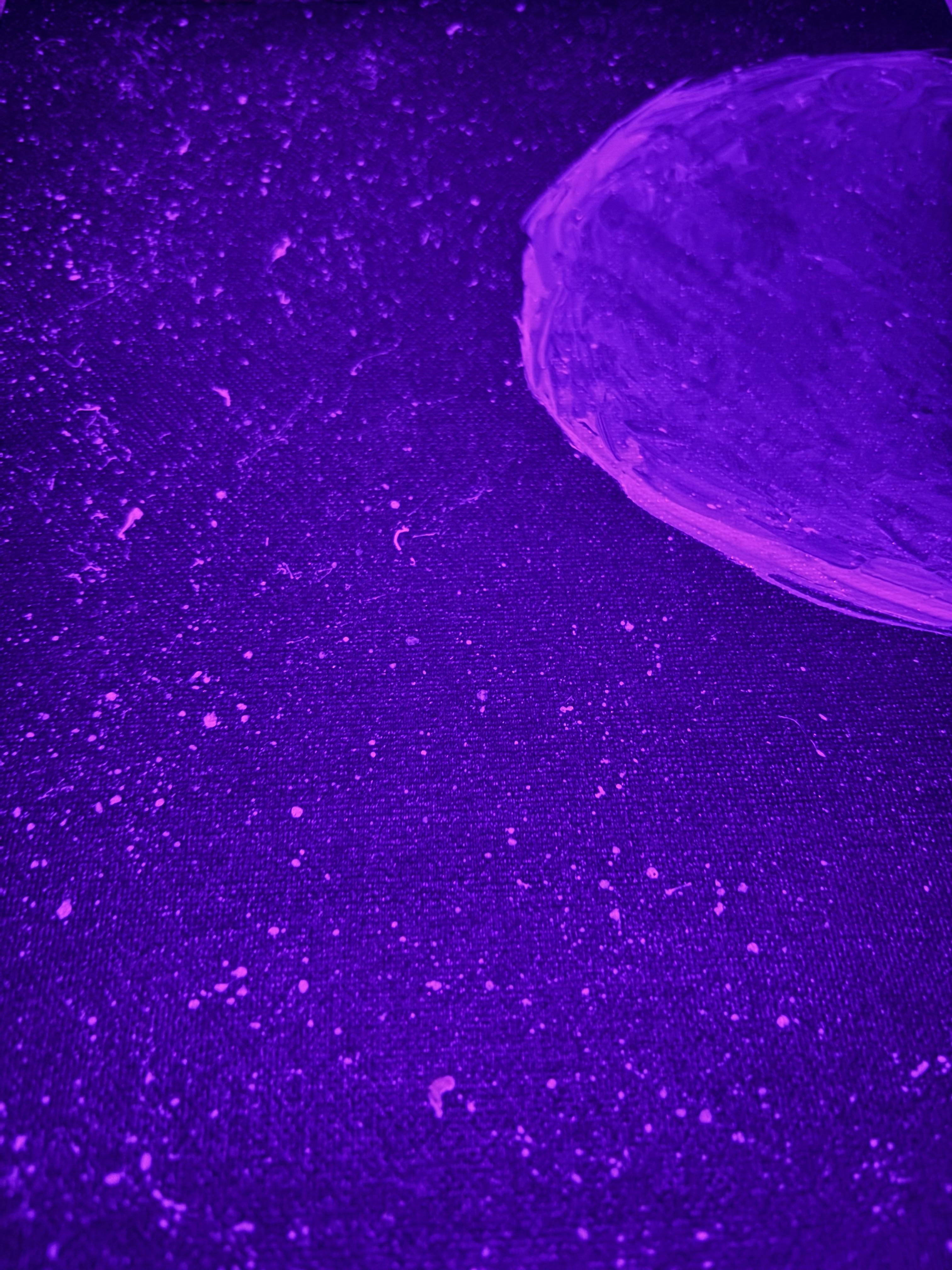
To add the glow of moonlight, use a glow-in-the-dark acrylic colour that matches the soft tone of the moon. Mix a small amount of fine radium powder into the same colour to increase the brightness of the glow. Blend this mixture with a touch of white to keep the shade natural and gentle. Apply the glowing paint carefully along the moon’s outline, then softly blend the edges inward so the light appears to fade naturally across the surface. This gradual blending gives the moon a realistic, illuminated look that becomes beautifully visible in the dark.
Draw Stars


To create the soft starry glow, mix radium powder with glow-in-the-dark white acrylic paint and a little regular white paint. Add plenty of water to thin the mixture so it becomes light and easy to flick. Dip your brush into this thin glowing paint and gently tap or flick it over the canvas to create tiny star-like dots. These small, scattered specks will glow very lightly in the dark, giving the background a subtle, dreamy moon-lit effect.
Moon Painting: the Glow of Its Own Moonlight Is Now Complete and Ready.


In normal light, the painting looks like a detailed moon scene with soft textures and a calm night-sky background. The colours appear natural, and the moon shows its rough surface and shading just like a real lunar view. But once the lights go off, the magic begins. The special layers of glow-in-the-dark paint and fine radium dust slowly charge in daylight and then release a gentle moonlike glow in the dark. The colour shifts from the regular grey tones to a soft, cool moonlight shade, making the moon look as if it is glowing on its own. Even the tiny starry dots around it light up faintly, adding to the effect. The painting changes completely between light and dark—calm and realistic in daylight, and beautifully glowing like a real moon at night.
In Dark