Laser Cut Key Holder

I moved in to a new apartment a few months ago (and I've been doing quite a few projects to improve the place) and one of those projects is a key holder. It holds all 4 of the keys of my roommates. We can tell who is home by whose keys are on the rack. Its mounted right by the door, so we never forget our keys now.
First things first, you will need a file for your laser cutter. I have provided and ai file (for Adobe Illustrator, which is the graphics design program I use) and also a pdf version of the design that is accepted by most design platforms. Please download whichever one fits your laser software better.
Tools and Materials


Tools:
This tutorial assumes you have access to and operator's knowledge of a CNC lasercutter. As each machine's software and interface are drastically different, I'll have to assume that you know how to operate the laser cutter you will be using. The laser I used accepts illustrator files, which is why I uploaded the design as an .ai file. However, I also uploaded the .pdf for people who use a different software. Open the .pdf file in your laser's software, as pdf's are very standard file types and should be accepted by your laser's software.
A hand held drill, either battery powered or corded will work. You will also need a small drill bit (around 1/16" will do) and a drill bit that matches the diameter of your dry wall mounts (1/4" worked for me).
A screwdriver or a philips head bit for your drill.
Materials:
Wood glue: I used Elmers wood glue, but any wood glue will suffice. You can probably also get away with using super glue or epoxy, but wood glue will yeild the best results. You can get a bottle for just a few dollars at your local hardware store, or even Walmart.
You'll need a a piece of 1/8" plywood (6"x10" will do). I used a small sheet of birch plywood I procured from my local supplier for just a few bucks.
You will need two screws with complimenting dry wall mounts. See the fourth picture above for a photo of the dry wall mount and screw I used, as well as the drill bit that was the same size as the drywall mount. You can get a whole box of dry wall mounts for about 5 dollars at your local hardware store.
Wood stain: optional but recommended.
Laser Cutting the Parts


Before you cut the file, you will want to customize the names. Open the file in your preferred graphics edittor. Click on the templates '[name]'. There are four of them for up to four people. Type the names of your apartment mates. If you have less than four, you can make one of them like a spare key holder or something.
I used a Universal Systems Laser Cutter. It has a materials data base in which you select materials and the machine then knows what power/speed/ppi settings to use. I used the material 'general medium woods' and set the thickness to .120 (using my calipers). I will have to assume for this part that you know how to use your own laser cutter, because they vary significantly from model to model.
Cut out all the pieces and bring them over to a workbench with your wood glue.
Assembling the Pieces


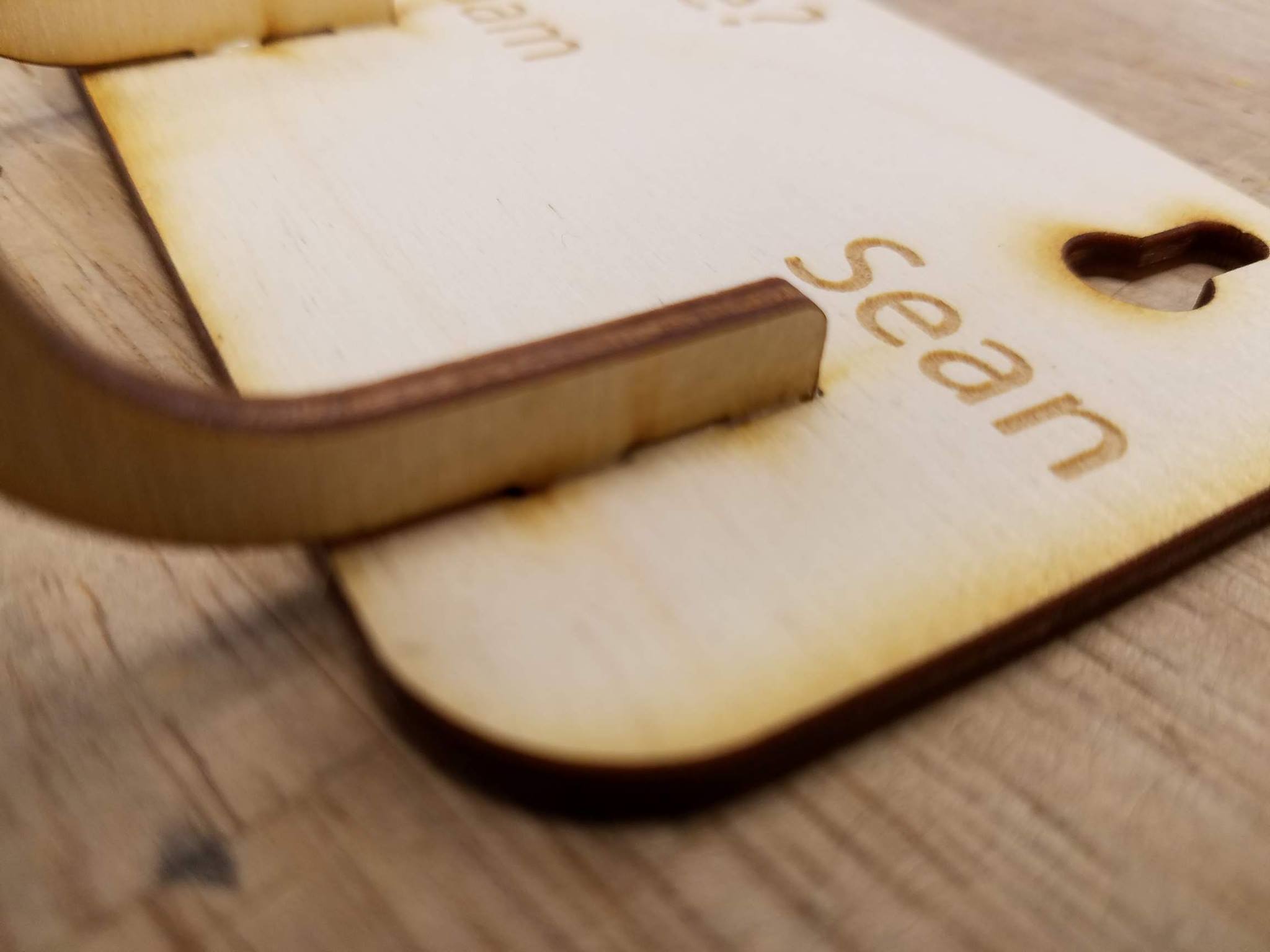


Lay out your pieces. You should have 4 hooks and one name plate. Put some glue on the back of the first hook. Insert it into the 2 holes for it, such that the hook points down relative to the name plate. Check out the third through 6th images above for illustrations of how the pieces go together.
Repeat this 3 more times with the other three hooks. After they are all glued together, check the edges for glue beads. Sometimes if you used too much glue some extra glue can squeeze out of the sides. Wipe this off with a napkin or cloth to prevent dried beads from marring your final product.
Optional: You can also add a stain to the key holder. Its a pretty small model so it will be pretty quick and easy to add a stain. If you opt to do so, head over to a well-ventilated area and use a paper towel or paint brush to wipe on some stain. Apply it gently so that the stain doesn't fill in the rastered names. I used the stain dark walnut.
Setting Up the Dry Wall Mounts


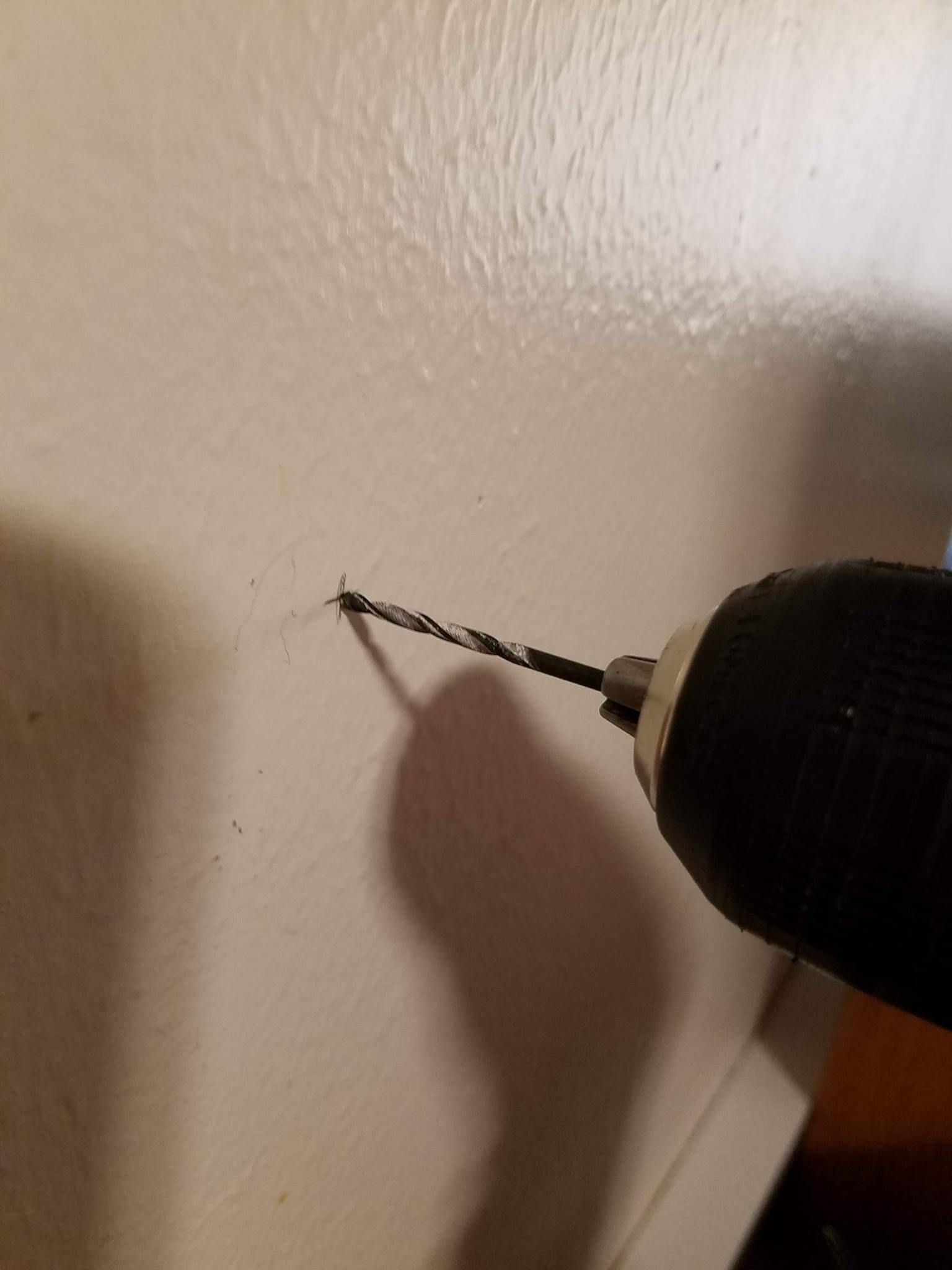


The idea for these types of screws is that you drill a hole for the plastic piece, then screw the metal screw into the plastic piece, causing the plastic piece to expand into the dry wall and lock it into place. It's much better than just using a standard screw into drywall, due to the crumbliness of drywall.
To start, position your spice rack where you want it to be, and use a pencil to lightely make two X's where the holes in the model are. These are the spots where you will drill into the wall. First, get out your drill and a very small drill bit. We will use this to make a pilot hole so that our hole is right on point, as larger bits can wander a bit before catching, causing your hole to be off center.
Insert the small bit into your drill, and drill into the drywall. After this pilot hole is set up, swap the bit out for the larger one. Make sure the larger one is the same size as the plastic piece from the dry wall mount. Drill out the larger hole, expanding the hole to be large enough for the plastic piece to fit in.
Next, press the plastic piece in until it is roughly flush with the wall. Insert the metal screw, and screw it in almost all the way. You will want to leave about 1/8" of screw left visible, which will be what the model slots onto.
Mounting the Key Holder


The key holder corners have a typical style of screw mounts. The head of the screw slides through the bigger hole at the bottom of the slot. Once it is all the way through, the smaller shoulder of the screw can slide up the slot, locking it into place.
After you mount it, go ahead and load up all your keys on there. I hope you and your apartment mates enjoy the key holder.
I hope you enjoyed the tutorial. If you would like to see similar DIY home improvement projects, check out my profile. Also, if you have any questions about this project or ideas for similar ones, I'd love to hear them so feel free to leave a comment.