DIY Golf Divot Tool | Wood, Brass & Steel
by designcoyxe in Workshop > Woodworking
558 Views, 10 Favorites, 0 Comments
DIY Golf Divot Tool | Wood, Brass & Steel


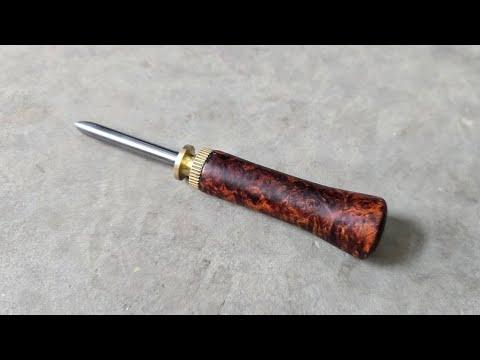
Tired of using generic, uncomfortable divot tools on the golf course, I decided to build my own custom single-prong version from scratch. This tool is designed to be both functional and stylish, combining a durable metal prong with a comfortable handle that fits perfectly in your hand.
In this project, I’ll show you step-by-step how I shaped, assembled, and finished the tool using common workshop tools — from cutting and filing metal to sanding and polishing the handle. Whether you’re a golfer looking for a personalized tool or a DIY enthusiast who loves hands-on projects, this build demonstrates practical techniques, clever tool use, and attention to detail.
By the end, you’ll have a single-prong divot tool that’s not only highly functional but also a piece you’ll be proud to carry on the course — and it’s a perfect fit for the Tools contest on Instructables!
Supplies


Materials
- Amboyna Wood Burl – for the handle, providing a beautiful and durable finish
- Brass Knurled Nut – for securing the prong and adding a custom touch
- 3/16" Diameter Steel Rod – the single prong for repairing divots
- Two-Part Epoxy – for strong bonding of components
- Silver Solder with Flux – for durable metal joinery
Tools
- Band Saw – for cutting the handle blank to shape
- Drill Press with 3/16" Drill Bit – for the prong hole
- Vice – to hold components securely while working
- Torch – for soldering the steel prong
- Hand Drill – used as a mini lathe by chucking the handle and spinning it against the belt sander for shaping
- Sandpaper – for smoothing and finishing the handle
- Mini Belt Sander – for shaping and refining edges
Cut Wood to Size

Step 1: Cut the Wood to Size
Start by cutting your Amboyna wood burl handle blank to the desired size using a band saw. Take your time to ensure straight, clean cuts — this will make shaping and finishing much easier later.
Tips:
- Keep your fingers clear of the blade and move slowly for control.
- Follow your marked dimensions carefully; a slightly oversized blank is okay, as you can refine it during sanding.
- Always wear eye protection while cutting.
Drill the Prong Hole

Next, drill a 3/16" hole for the steel prong using your drill press. Secure the wood handle blank in a vice to keep it steady while drilling.
Note: The photo shows me drilling a different piece of material — I didn’t capture the actual handle at this step, but the process is the same.
Tips:
- Double-check the position and alignment of the hole before drilling — this ensures the prong sits straight.
- Drill slowly and steadily to prevent splitting the wood.
- Wear eye protection.
- After drilling, lightly sand the hole edges if needed for a smooth fit.
Insert the Prong With Epoxy


- Mix your two-part epoxy according to the manufacturer’s instructions.
- Carefully insert the 3/16" steel prong into the drilled hole in the handle blank.
- Wipe off any excess epoxy before it begins to set.
- Allow the epoxy to fully cure before proceeding to shaping.
Tips:
- Double-check alignment to ensure the prong is straight.
- Work carefully to avoid getting epoxy on areas you don’t want to bond.
Shape the Handle & Sand


- Once the epoxy is dry, mount the handle in a hand drill and use it as a mini lathe. Slowly spin the handle against your mini belt sander to refine the shape.
- While shaping, test-fit the brass knurled nut onto the prong to ensure it will sit flush with the wood surface. If it doesn’t slide freely, carefully ream the internal threads by drilling it out until it fits smoothly and flush.
- Continue sanding the handle by hand while it spins in the drill, gradually progressing up to 1500 grit for a silky-smooth finish.
Tips:
- Move slowly to maintain control and avoid gouging the wood.
- Check frequently that the nut remains flush and aligned with the wood.
- Progress through sandpaper grits gradually — don’t skip steps.
- Always wear eye protection.
Cut and Shape the Prong Tip


- Cut to Length: Use a band saw to cut the steel prong down to the proper length for your divot tool.
- Shape the Tip: With the belt sander, carefully sand a slight point onto the tip of the prong. It doesn’t need to be razor-sharp — just enough to pierce the turf easily when repairing divots.
Tips:
- Keep your hands clear of the blade when trimming and shaping.
- A modest point is best.
- You can smooth out the tip later with fine sandpaper if needed.
Solder the Prong & Secure the Nut


- Position the Tool: Place the handle with the inserted prong into a vice for stability.
- Fit the Nut: Slide the brass knurled nut into position, making sure it will sit flush with the wood.
- Solder the Prong: Apply flux and use silver solder to securely attach the steel prong to the handle. Heat carefully with a torch until the solder flows and bonds the prong.
- Clean Up Excess Solder: After the solder has cooled, mount the handle in a hand drill and spin it while sanding by hand. This removes excess solder, smooths the joint, and blends the prong, nut, and handle seamlessly.
Tips:
- Keep the joint aligned while sanding to maintain a straight prong.
- Move slowly and sand evenly for a smooth, professional finish.
- Always wear eye protection and heat-resistant gloves while soldering.
Final Finish With Boiled Linseed Oil


- Apply the Oil: Dip the finished divot tool into boiled linseed oil to enhance the wood grain, protect the handle, and give it a rich, polished appearance.
- Remove Excess: Wipe off any extra oil and allow the handle to dry thoroughly.
- Inspect the Tool: Check that the prong, nut, and handle are all smooth, flush, and ready for use.
Tips:
- Work in a well-ventilated area when using linseed oil.
- Allow sufficient drying time before handling the tool extensively.
- This final step brings out the natural beauty of the Amboyna wood burl and gives your divot tool a professional look.
Using the Divot Tool
- Identify the Divot: Locate the damaged area on the green that needs repair.
- Position the Tool: Hold the divot tool by the handle and place the single prong just outside the edge of the divot.
- Insert the Prong: Stab the prong into the turf around the divot, not directly in the middle of the damaged area.
- Pivot the Prong: Gently push or pivot the prong toward the center of the divot, working from multiple sides if necessary. This lifts and presses the surrounding soil back into the crater.
- Smooth the Surface: After filling the divot, lightly tap the repaired area with your putter or foot to level the surface.
👉 I’ve included a short video demonstration so you can see exactly how the repair is done in action.
Tips:
- Avoid pushing straight down in the center of the divot — this can compact the soil and slow recovery.
- Work around the edges for a more natural repair.
Downloads
Conclusion
And there you have it — a fully functional, handcrafted single-prong divot tool made from Amboyna wood, brass, and steel. Not only is it a practical tool for keeping greens in great shape, but it’s also a one-of-a-kind piece of craftsmanship you can proudly carry in your golf bag.
This project combines woodworking, metalworking, and finishing techniques into a compact build that’s both useful and beautiful. Every time you repair a divot, you’ll be using something you made with your own hands.
💡 If you’d like to see more builds, restorations, and creative projects, check out my YouTube channels:
- 🎥 Deus Golf Co. — custom golf tools, club work, and builds
- 🎥 Kramer Design Co. — design, DIY, and creative projects
NEW VIDEO HERE: DIY Mini Lathe Bench
👉 Don’t forget to subscribe so you don’t miss future projects!