Affordable Youth Housing


In Richmond, Virginia, too many young people face the harsh realities of housing insecurity, poverty, and environmental neglect. Roots Rising is a bold, community-driven response an affordable housing solution that does more than just provide shelter. It’s a place to grow. Roots Rising is a modular, sustainable housing community designed for homeless and low-income youth in South Richmond. This project doesn’t just offer permanent supportive homes—it plants the seeds for long-term opportunity. By integrating green building techniques, job training programs in eco-construction and agriculture, and restorative outdoor spaces, Roots Rising addresses two urgent local problems: youth homelessness and environmental disinvestment.
Link: https: Roots Rising
Supplies
Structural Materials
- Cross-Laminated Timber (CLT) or Structural Insulated Panels (SIPs)
- → Used for modular housing unit walls and floors. Strong, lightweight, and sustainable.
- Recycled Steel Framing
- → Durable and ideal for prefabrication and modular construction.
- Fiber Cement Siding (e.g., Hardie Board)
- → Fire-resistant, weatherproof, and low maintenance for exterior covering.
- Metal Roofing with Integrated Solar Panels
- → Reflective standing seam roof with thin-film or panel solar integration.
Sustainable and Eco Materials
- Low-VOC Paints & Sealants
- → To ensure good indoor air quality.
- Bamboo or Cork Flooring
- → Durable, sustainable, and affordable interior floor finish.
- Recycled Denim or Hemp Insulation
- → Non-toxic, effective insulation made from upcycled materials.
- Permeable Pavers
- → For paths and gathering spaces; supports stormwater management.
- Rainwater Collection Barrels & Gutter System
- → For irrigation and greywater use in gardens.
- Reclaimed Wood (for furniture or trim)
- → Adds warmth and reduces cost and environmental impact.
Energy and Comfort Systems
- Mini-Split HVAC Units
- → Energy-efficient heating/cooling for individual units.
- LED and Solar Panels
- → Long-lasting, low-energy lighting.
Investigation

Challenge:
How can we create permanent, affordable housing for youth facing homelessness in Richmond, VA—while also promoting environmental restoration and green job skills?
Community Problems in Richmond have high youth poverty rates and many unused, neglected green spaces. Vulnerable youth often lack safe housing and pathways to employment or education.
Tools
Construction Tools
- Power Drill & Impact Driver
- → For framing, assembling modules, and finish carpentry
- Table Saw / Circular Saw
- → For cutting framing lumber or trim
- Nail Gun / Framing Nailer
- → For fast framing with CLT or SIP panels
- Measuring Tape / Laser Distance Measurer
- → For site layout and unit placement
- Level & Speed Square
- → To ensure structural accuracy during framing
- Hammer, Wrenches, Pliers
- → Essential hand tools for general assembly
- Utility Knife
- → For cutting insulation and sealing materials
- Caulking Gun
- → For applying sealant and insulation around windows/doors
- Safety Gear
- → Hard hat, safety goggles, gloves, and steel-toed boots
- Scaffolding or Ladder
- → For roofing, siding, and installing solar panels
Planing tools
Sketch tools (pencil, ruler, paper)
Laptop or tablet
Design/Planning

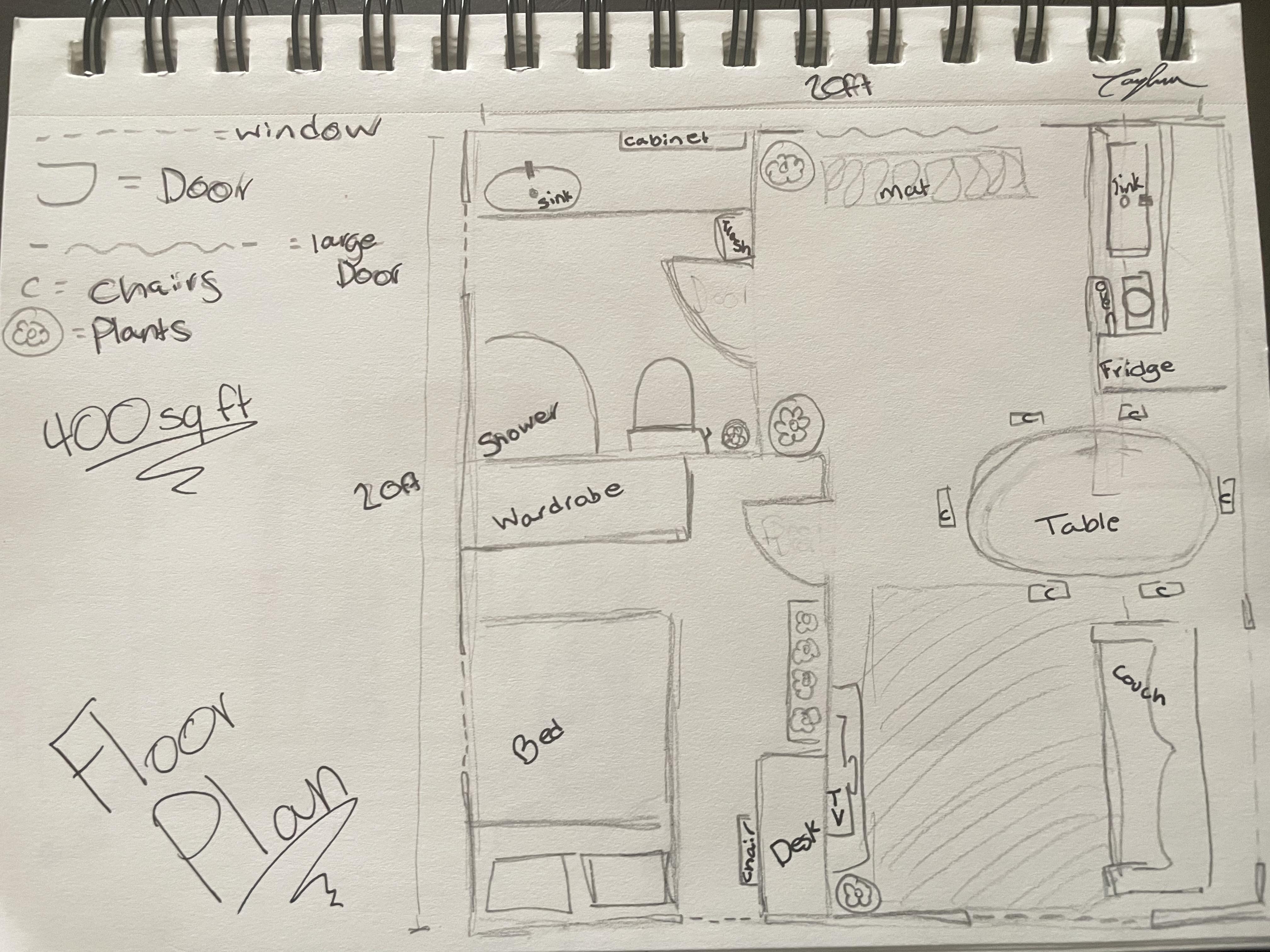
Ideal Key Features
- 20 modular units (300–400 sq ft each)
- Central courtyard with gardens and trees
- Eco-education center for job training
- Shared laundry and kitchen areas
- Rooftop greenhouse and compost station
- Solar panels, rain barrels, native plants
- Storytelling wall celebrating Black and Native Richmond culture
Design Sketch
(Example of the idea it would look like above!)
Bird’s-Eye View (Top View)
- 4 rows of 5 modular homes in a Box-shape
- Garden beds and compost area in the center
- Eco-education center near the houses
- Paths made of permeable pavers
- Entrance with bike racks and mural gate
Front View (Elevation)
- One unit with:
- Sloped roof + solar panel
- Porch and planter box
- Recycled siding and rain barrel
Evaluate
Strengths
- Helps solve youth homelessness and joblessness
- Green construction + eco-learning = long-term impact
- Modular system makes it fast, affordable, and repeatable
Challenges
- Needs strong partnerships (nonprofits, city, funders)
- May face zoning/policy hurdles for mixed-use development
Next Steps
- Secure partners in housing and education
- Prototype a single pod and mini garden
- Present to city council and Richmond housing advocates!
Fin
This project was so much fun to work on. It gave me the chance to think creatively, use real design tools, and imagine something that could make a difference in my community. I learned a lot about sustainable building, affordable housing, and how important it is to give people safe spaces to live and grow.
Through Roots Rising, I wanted to demonstrate that Richmond deserves a place like this because we currently lack such an establishment. I hope this project inspires others to think bigger about what affordable housing can be, not just a roof, but a place to build skills, connect with nature, and feel proud of where you live.
I’m proud of what I created, and I had an amazing time doing it!
Thank you
- Rita T